
“No one will protect what they don’t care about, and no one will care about what they have never experienced.” — Sir David Attenborough
Here I am again, sat at the kitchen table (my office) reflecting on what has been a fabulous month. We started it by celebrating our wedding at Old Bidlake with 120 family and friends. Emily launched a fabulous new course called Finding Your True Voice. Then Sir David Attenborough celebrated his 100th birthday with the world, Sam my eldest son due to his work with The Duke of Edinburgh Award was invited to Buckingham palace to celebrate its 70th anniversary and I went to a book launch organised by the fabulous team at West Dorset Wilding. The book was Why Nature Matters by Caroline Essame. and its this book launch that inspired this blog.
I went to the event not really knowing what to expect. However, the evening sent me down a bit of a rabbit hole of research. I have banged on about my observations on the effect of nature on the wellbeing of our campers both young and old via my blogs since moving to our small West Dorset campsite 3 years ago, as I am passionate about the potential humans have to develop into the best versions of themselves, given the right environment.
I was in a room with an esteemed panel of experts in this very field (no pun intended):
- Lord Jim Knight, Former Minister of Schools
- Michael Dooley, Lord Lieutenant of Dorset
- Dr William Bird MBE, CEO of Intelligent Health
- Caroline Essame, CEO of CreateCATT and author
All speaking about this very subject, with more gravitas and knowledge than me, and it gave me hope.
Our values of Nature, Nurture and Connection sit at the heart of all we do here at our west Dorset campsite, giving our campers every opportunity to slow down, sit within nature and become part of it with no distraction is key. (See another blog)
We live in an age of extraordinary convenience. Children have access to more entertainment, more stimulation, more comfort than any generation before them. And yet something essential is slipping away. The kind of childhood shaped by mud and weather and wonder, by hours spent doing nothing in particular under an open sky.
This is not nostalgia. The consequences are measurable, and they are showing up in the mental health of an entire generation.
What happens in the brain before eleven
Deep within the brain sits the amygdala, a small almond-shaped Gland that governs how we process emotion, manage stress, and respond to threat. In children, this region is still forming, and neuroscientific research suggests that regular time in natural environments during this period plays a meaningful role in shaping how it develops.
Children who spend regular time in green spaces show healthier amygdala development, greater volume, more regulated function, and a more resilient stress response, compared to those who grow up with little access to nature. The result is lower rates of anxiety and depression, and greater emotional stability throughout life.
The critical window is broadest before the age of eleven, when the brain retains its highest degree of plasticity. A landmark study tracking over 900,000 people found significantly lower rates of mental health disorders in adults who had greater exposure to green space in childhood. Nature, for the developing brain, is not a luxury. It’s a necessity for us to flourish.
The science behind this research is what parents and teachers have long sensed instinctively: that a child who has spent a morning outside is calmer, more focused, more themselves. Time in nature does not just feel good. It builds the brain that will carry that child through the rest of their life.
Why camping, and why regularly?
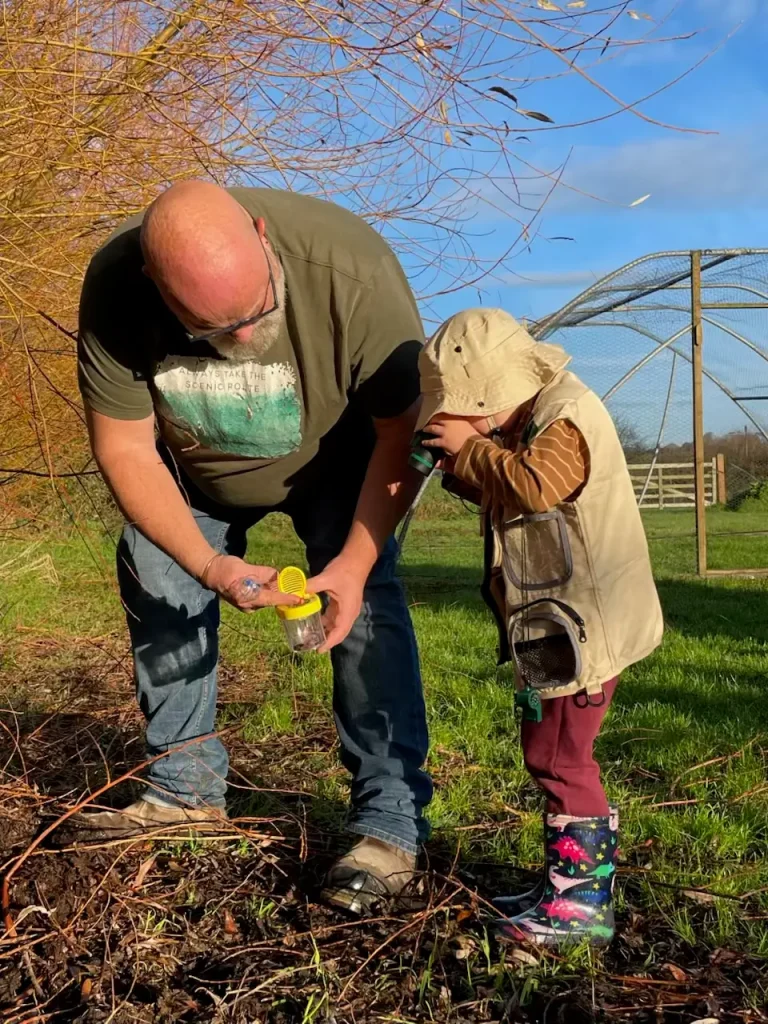
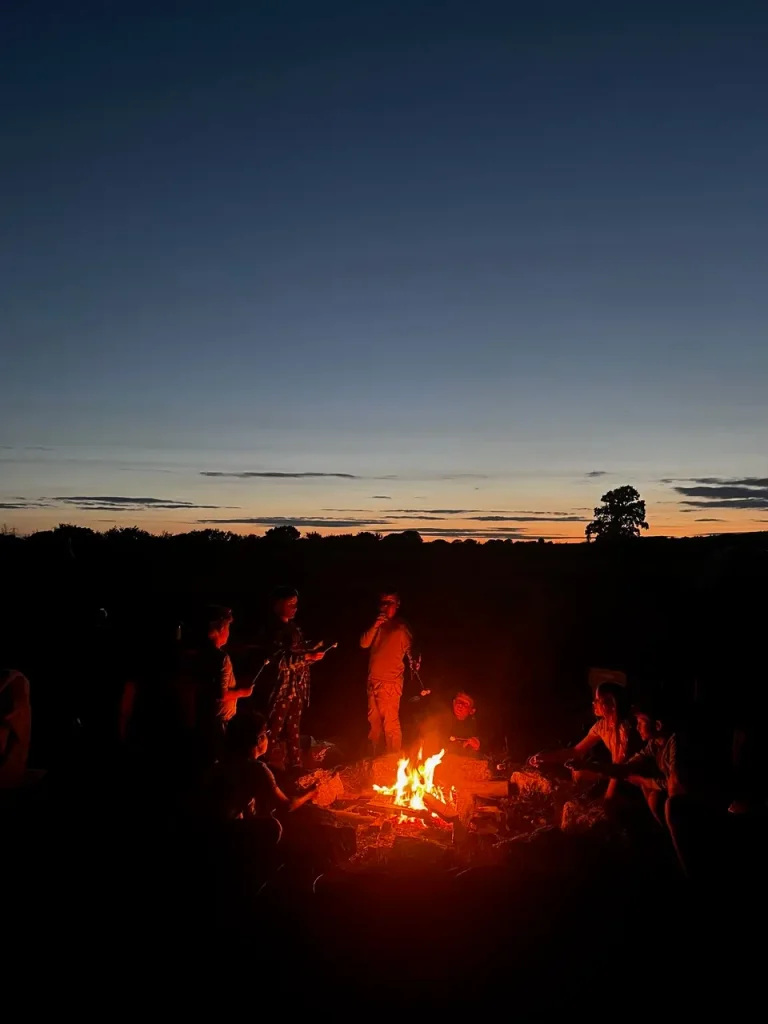
Day trips to the park matter. A walk and playing in the woods matters. But there is something qualitatively different about sleeping under the stars, about being in nature not for an hour, but for a night, and then another. Camping removes children from the rhythms of indoor life entirely. It asks something more of them and gives something more back. As mentioned before, I have written about this in previous blogs.
Six reasons to make it a habit;
- Resets the nervous system. Away from screens and artificial light, children’s cortisol levels drop and sleep quality dramatically improves, often within a single night.
- Sustains the developmental window. Repeated, immersive nature exposure, not just occasional visits, is what appears to drive the most significant amygdala development in children under eleven.
- Deepens family connection. Without the distractions of home, families talk more, play more, and pay attention to each other. Camping creates the conditions for the conversations that matter.
- Builds a lifelong relationship with nature. Children who camp regularly grow into adults who protect wild places. The emotional bond formed early is the foundation of environmental stewardship.
- Creates memories that last a lifetime. Ask any adult what they remember most from childhood. Rarely is it a screen. Almost always, it is something that happened outside.
- Builds practical resilience. Lighting a fire, putting up a tent, navigating unfamiliar landscapes. Camping teaches children that discomfort is manageable, and that they are more capable than they thought.
How do we do this? well we are not alone as the native American proverb say “It takes a village to raise a child” You could encourage your children to join the Scouts or the Duke of Edinburgh award. or take them Camping yourself. Any campsite will do, but ideally Old Bidlake. The point is to go regularly, to make nature not a treat but a rhythm, to let children become familiar with it, comfortable in it, attached to it.
Because attachment is what Sir David Attenborough is really talking about. Not knowledge of nature. Not respect for it in the abstract. But love, the kind that only comes from time spent together.
This reminds me of a young lad staying at our campsite last week. He was two. His first camping trip. I sensed his Mum and Dad where slightly nervous of this first experience. However what a joy it was to witness him taking to it like a duck to water, and to see the whole family relax, Become more familiar, more comfortable, and more attached to nature. Will they be back? I hope so.
So passionate am I about this that it has just given me an idea. I want to make camping more regularly throughout the year a little more accessible, How do we do this Im not sure yet. Let me have a think and I will let you know what I come up with. One thing I do know, is we can not do it alone. We need to be that village once again. I think it is this that gave me hope at the book launch. Its not just me having these thoughts there are an awful lot of good people out there having similar thoughts, we just need to join the dots and come together.
Feel free to to let me know any ideas you may have
Subscribe below so you don’t miss out when that idea lands.